
Virtual tour
Look Inside Before You Come
A minute and a half through the suite in Sorrento Valley. Knowing what a room looks like is one less unknown on a first morning.
No sound is needed — nothing is said that is not also written below.
The group rooms
Where most of the Intensive Outpatient Program happens — Growth Group, Process Group and Seeking Safety, three mornings a week.
- Chairs in a circle, not rows facing a front. Nobody is at the back, and nobody is being lectured at.
- No more than twelve people. Small enough that the clinician leading knows how each person is doing.
- Windows in every one. The building backs onto the canyon, so what you are looking at is eucalyptus rather than a parking structure.
- More than one room, so groups are not stacked into a single space.

The individual therapy rooms
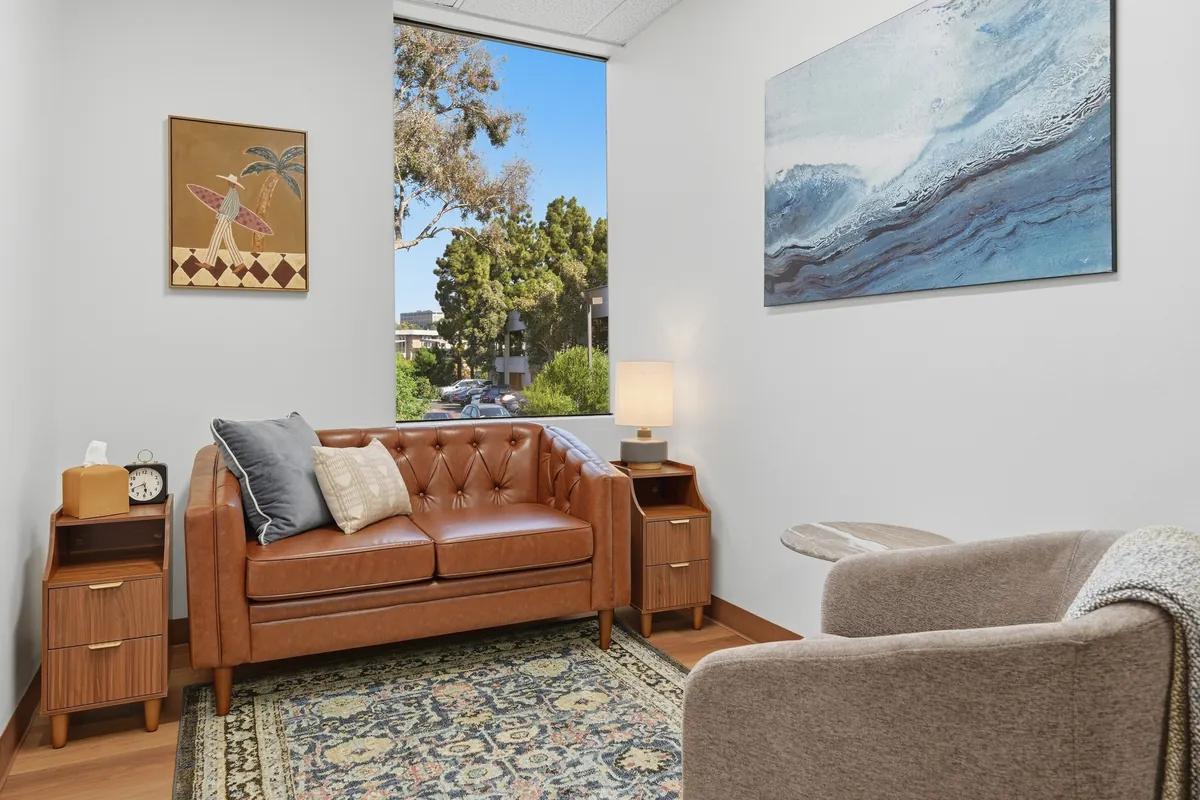
Smaller, softer, and separate from the group rooms on purpose. Everyone in the IOP has a one-to-one session here every week with their own therapist, scheduled outside group time, and individual therapy also stands on its own.
- Sofas and armchairs rather than a desk between two people.
- A door that closes, in a part of the suite away from the busier rooms.
- Tissues, a clock you can see, and somewhere to put a cup of tea down. Small things, and they are the things people notice.
The meeting room
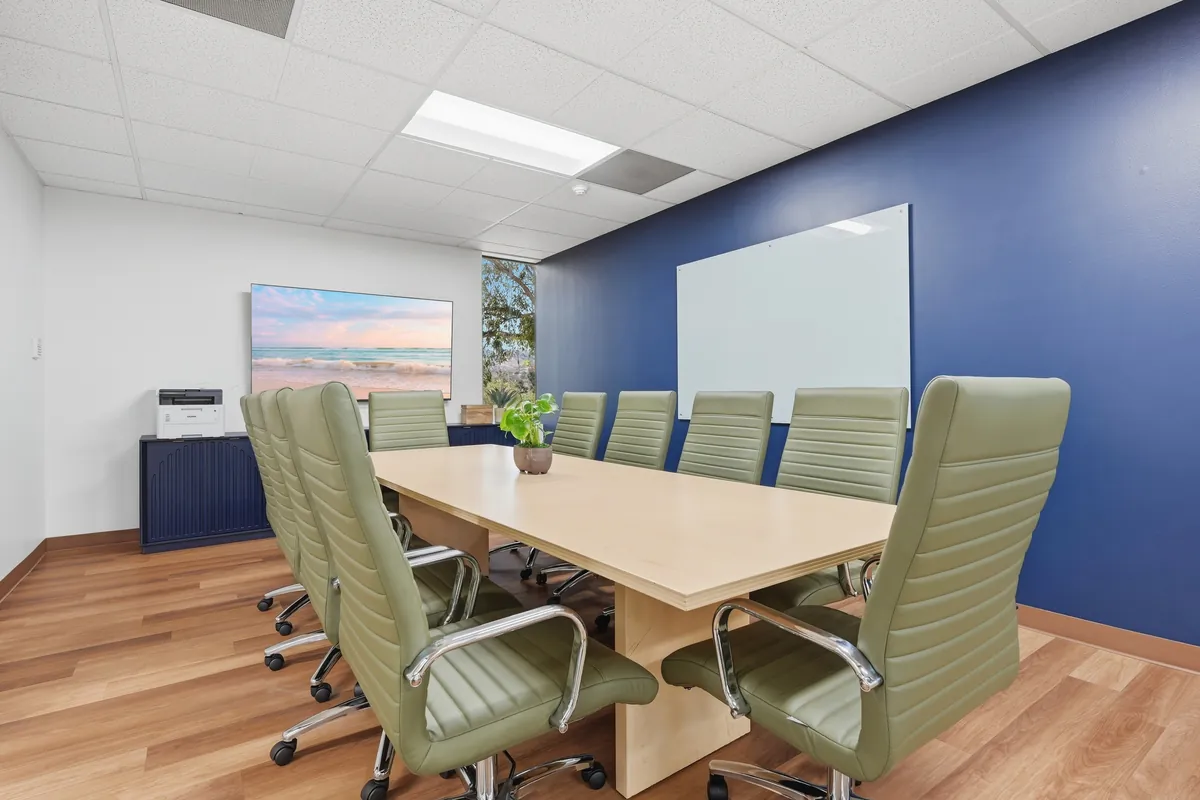
The largest room in the suite, used for support sessions involving the people around a client, for case conferences where the whole care team sits down together, and for orientation.
- A table everyone can sit at, which changes the shape of a difficult conversation.
- Glass walls onto the corridor, with blinds — open when it should feel open, closed when it should not.
Worth being precise about what this is and is not: we do not provide couples therapy, family therapy or therapy for children. Where a family needs treatment as a unit, we will provide appropriate referrals. What happens in this room is support for the adult who is in care with us, with the people they have chosen to involve.
The movement room
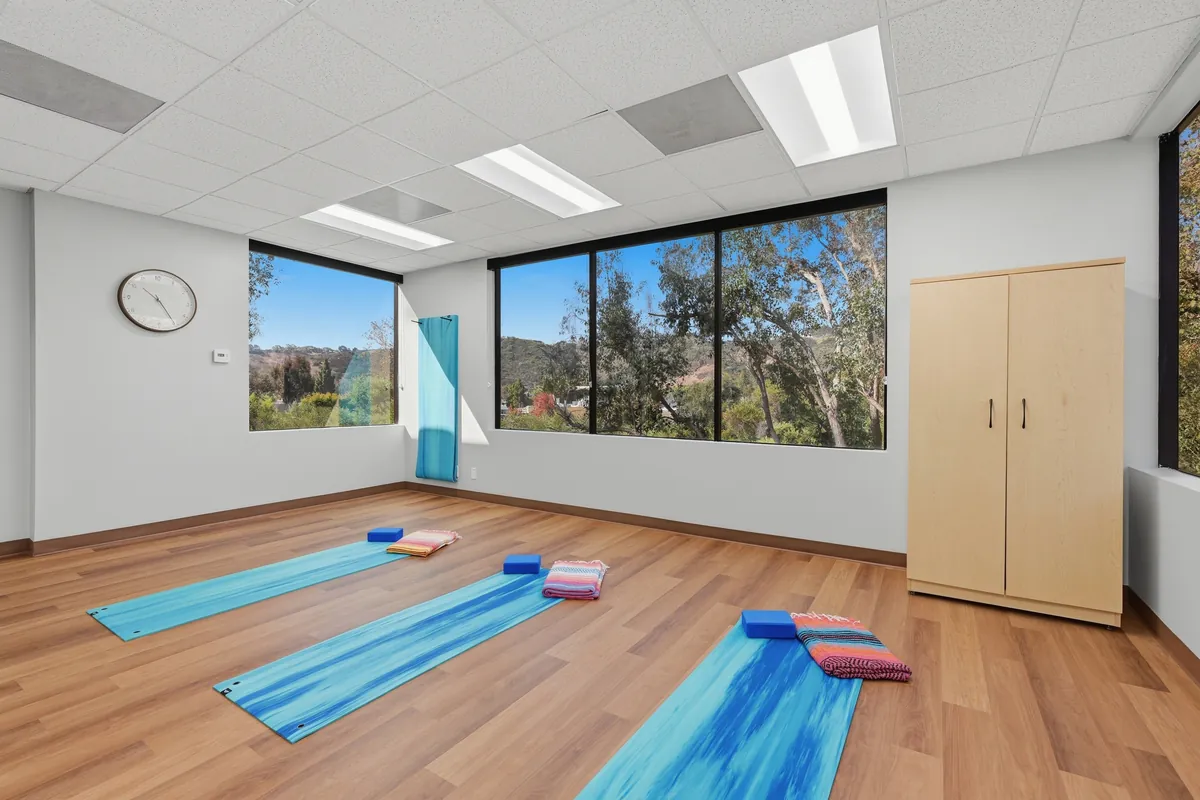
A room with the furniture taken out of it, which is rarer in an outpatient clinic than it sounds. This is where the adjunctive groups run, each led by someone who does that work:
- Yoga and somatics — mats, blocks and blankets, on a wood floor.
- Mindfulness and sound bath.
- Music therapy, with a music therapist.
- Sleep health, led by a nurse practitioner, and a group on food and the body led by a clinician who specializes in healthy eating and mental health.
These are part of the program week rather than extras you pay for separately.
Between groups
Three hours is long enough that where you go in the middle of it matters. There is a cafe area with booth seating and tables by the windows, coffee and tea, and something to eat.
Reception is the first thing you reach off the lift, and the suite is on the second floor. The building is wheelchair accessible throughout — entrance, parking, restroom and seating — and parking is free, on site, in the lot out front.
Full directions, including how to find Suite 225, are on our contact page.

If you are in crisis, do not wait for an appointment.
Call or text 988 for the Suicide and Crisis Lifeline, available 24 hours a day. In San Diego County the Access & Crisis Line on (888) 724-7240 is also staffed around the clock. If there is immediate danger to life, call 911. Strata Outpatient is a scheduled outpatient clinic — not an emergency service, a crisis line, or a 24/7 provider.